For employers & agencies
Send the requirement. Get an honest answer.
To hire through MITT, send four things: the trades you need, the approximate number of positions, the site or project location, and when you need people on site. MITT reviews the requirement, clarifies it, identifies and screens candidates, and coordinates interviews for your team.
MITT coordinates technical training, skilled-worker screening and interview logistics for industrial employers and staffing agencies working from Visakhapatnam. Describe the requirement and you will get a direct answer about what can realistically be supported. Activities vary by employer, trade, assignment and jurisdiction.
What to send
Four facts are enough to start.
You do not need a specification, a job description or a template. These four details decide whether the requirement can be worked on at all.
- Trades
- One trade or several. Mixed trade and mixed experience requirements are normal — the categories below are the ones MITT works in.
- Volume
- The band MITT plans against: 1 – 5 positions · 6 – 25 positions · 26 – 100 positions · More than 100 positions.
- Site
- Where the work happens — city, plant or project site — and whether the role is site-based or plant-based.
- Timeline
- When you need people: Immediate · Within 30 days · Within 90 days · Exploring options.
Capability
Seven categories, confirmed against a requirement.
Each category describes the work MITT coordinates in it — not stock that is sitting available.
Welding
Welders assessed on process familiarity, position work and workplace discipline before an employer interview.
Welding on the capability mapFitting & fabrication
Fitters and fabricators coordinated against employer drawings, tolerances and assembly requirements.
Fitting & fabrication on the capability mapElectrical trades
Industrial and site electricians screened for practical troubleshooting and safe working practice.
Electrical trades on the capability mapMechanical & industrial support
Mechanical maintenance and industrial support roles coordinated to plant and project requirements.
Mechanical & industrial support on the capability mapPlumbing
Plumbing candidates assessed on installation practice, pipe work and site readiness.
Plumbing on the capability mapConstruction trades
Construction trade roles coordinated for project phases, with requirements clarified per site.
Construction trades on the capability mapGeneral industrial workforce
Helpers and general industrial roles coordinated for volume requirements and shift patterns.
General industrial workforce on the capability map
Process
What actually happens after you send it.
The first five stages decide whether a requirement is workable. The last three apply only where the requirement calls for them.
A distinction we keep
Interview and selection are not deployment. A candidate becomes a confirmed join only when the employer confirms it after the applicable clearances and documentation.
Requirement received
You send the trades, approximate numbers, location and timeline. Any format is acceptable to start.
Requirement clarified
We confirm trade scope, experience level, shift and site conditions — the detail that decides whether a candidate is genuinely suitable.
Candidates identified and screened
Relevant candidates are identified from MITT's own registration and training activity and screened on trade competence and work history.
Interview coordinated
Interviews are arranged for your team, in the format you prefer — at MITT, on site, or remotely.
Employer assessment and selection
Your team assesses and selects. MITT coordinates logistics and communicates outcomes; the hiring decision stays with you.
Trade testing
Placement and testing facility
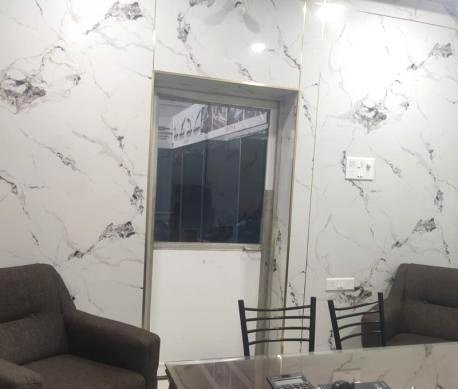
MITT's facility carries trade-specific testing equipment, which lets employers assess practical skill before committing to a candidate rather than relying on an interview claim.
- Placement and recruitment across skilled trades
- Trade-specific practical skill testing
- Candidate screening and evaluation
- Employer-focused selection support
- Practical assessment against the job requirement
How to begin
What helps us answer, and what we will never ask for.
A requirement is reviewed by a person, against what MITT can actually coordinate. There is no queue to buy into and no form that guarantees a reply within a fixed time.
Information that helps
- Trades needed, with approximate counts per trade
- Site or project location, and the type of site
- Shift pattern and working conditions
- Experience level you actually expect
- Employment type and expected duration
- When you need people on site
Never collected through this site
- Fees of any kind from workers
- Passport, visa or emigration documents
- Medical records or certificates
- Worker registration or candidate profiles
- Payment or bank details
Two ways in: submit the requirement, or call +91 74163 42020.
Submit a Workforce RequirementFormerly St. Patrick Welding Institute
Twenty-three years in the same trade, in the same place
Metkan Institute for Technical Training - formerly St. Patrick Welding Institute - has trained and placed industrial tradespeople from Autonagar, Visakhapatnam for more than 23 years.
That history is the reason employers keep coming back: the institute has spent two decades learning what a fabrication shop, a pipeline job or a construction site actually asks of a worker before anyone is sent to an interview.
Evidence
What MITT can evidence
This website publishes no client names, testimonials or logos, because none have been approved for publication. The figures shown earlier are MITT's own published numbers. What a conversation adds is the part a website cannot: method, trade-testing capability and process, evidenced directly with your team.
- Screening method
- The criteria used to assess trade competence and readiness are described openly, so you can judge whether they match your requirement.
- Training capability
- The practical areas MITT prepares workers in, and what a preparation block actually covers, can be walked through before you commit.
- Process visibility
- You are told where a requirement stands at each stage, including when it stalls or cannot be met.
- Facility discussion
- A conversation about visiting or reviewing the working environment can be arranged directly with MITT.
Questions
Straight answers before you send anything.
Including the ones where the answer is a limit rather than a benefit.
Which worker categories can MITT support?
MITT's work covers welding, fitting and fabrication, electrical trades, mechanical and industrial support, plumbing, construction trades and general industrial roles. A category being listed does not mean candidates are available in it today — MITT confirms active availability only after reviewing a specific requirement.
Can one requirement cover several trades?
Yes. Requirements commonly mix trades and levels. Send the trades, approximate counts per trade and the site location, and MITT will clarify scope before confirming anything.
How are candidates screened?
Screening is a human assessment of trade competence, relevant work history and workplace readiness, carried out against the requirement you describe. It is not a certification, and it is not a prediction of individual performance.
Can interviews be coordinated for our team?
Yes. Interviews are arranged for your team in the format you prefer — at the MITT premises, on your site, or remotely. Coordinating an interview is not a selection and does not create an offer.
Is additional training available for selected candidates?
Where the selected trade or process needs it, MITT can run practical preparation aligned to the requirement. It is scheduled when the requirement justifies it, and programme details are confirmed directly.
How are candidate outcomes recorded and communicated?
An outcome — joining, deferral or withdrawal — is recorded once your organisation confirms it. Interview, selection, medical clearance, documentation and joining are distinct events and are reported as distinct events.
Which locations can MITT currently serve?
MITT operates from Visakhapatnam, Andhra Pradesh. Coverage for a specific site or destination is confirmed per requirement, since it depends on the trade, the numbers and the jurisdiction involved.
How does a new employer begin working with MITT?
Submit a workforce requirement through this website with the trades, approximate numbers, location and timeline. MITT reviews it, clarifies anything unclear, and replies with a realistic next step — including a clear answer if the requirement cannot be supported.
Does MITT handle overseas recruitment?
Where international activity is involved it is coordinated through authorised partners and remains subject to applicable law and permissions. MITT does not advertise independent overseas recruitment authorisation, and does not promise visas, clearances or approvals.
Does MITT charge workers for registration?
This website does not collect fees, passport details, medical records or visa documents. Any commercial terms are confirmed directly between MITT and the organisation enquiring.
Document
MITT capability brochure
Programmes, facility details and trade-testing capability, in one four-page document you can forward internally.
Next step
Let’s understand your workforce requirement.
Trades, approximate numbers, site and timeline. That is enough for MITT to give you a straight answer.